Bed Shear Stress
Sediment transport is driven by bed shear stress. The shear stress (force per unit area) of the flow on the bed is what plucks sand gains off of the bed and entrains them in the flow. If the bed shear stress exceeds a threshold value for a particular grain size and composition, that grain will be lifted from the bed and carried by the flow. If the bed shear stress drops below that threshold value, the entrained grain will drop back to the bed. So the bed shear stress controls whether erosion (removal of grains) or deposition (settling of grains) will occur.
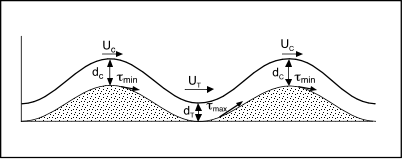
The bed shear stress (tau t) is a function of the gradient in the velocity profile of the flow. This gradient is essentially a function of the flow velocity over flow depth (U/d). In antidunes, this gradient is at a maximum in the trough and minimum at the crest since UT/dT is greater than UC/dC.
Since the flow has a mass, there are additional components to the bed shear stress. The flow's inertia causes it to impinge on the bed at trough and separate from the bed at the crest. These effects shift the bed shear stress maximum (tmax) and minimum (tmin) in a downstream direction from the trough and crest as shown in the figure above.
2:35:11 PM 
|


