| |
 |
Monday, June 24, 2002 |
‘Deep-linking’ flap could deep-six direct links to relevant content for students. Educators should be aware of a brewing controversy that soon could limit how they are allowed to connect students to news articles and other copyrighted materials over the internet: Some online publishers, angry about the practice of “deep-linking” to their web sites, have begun threatening legal action against users of the tactic, calling it a violation of U.S. copyright law. [elearningpost]
10:21:22 PM 
|
|
"Open source" video-format to be released. Slashdot reports that Xiph (the Vorbis people) is creating a BSD-licensed version of On2's video codec. For those of you who aren't free software or AV geeks, that means that the people who make a patent-free, royalty free file-format for audio have adopted a killer video format under the same terms. If this acheives acceptance in the field, it will likely kill the brutal patent-royalties associated with MPEG4 and other proprietary formats. Link Discuss [Boing Boing Blog]
10:19:39 PM
|
|
Short-story collection of the decade if not the century. 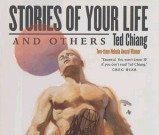 Ted Chiang's collection of short stories, "Stories of Your Life and Others," is out. Ted is a national treasure. He writes one story every million years or so, but each of those stories is a goddamned jewel. He's won two Nebula awards (I was at one of the Neb banquets where he received an award, though he wasn't, and sat at a table filled with three or four of Ted's agents; that's right, three or four of Ted's agents. The guy's never written a novel, has no plans to, but just in case, there's a whole queue of agents ready to represent him). He's sold a short-story collection -- this collection -- to Tor, even though he has no novel planned; an occurrence that's basically unheard of. I'd be jealous if he wasn't such an amazing, humble, decent guy -- check out his bio from the jacket-flap: "Ted Chiang lives near Seattle, Washington." If I could write as well as Ted, I'd be (even more) insufferable. Ted Chiang's collection of short stories, "Stories of Your Life and Others," is out. Ted is a national treasure. He writes one story every million years or so, but each of those stories is a goddamned jewel. He's won two Nebula awards (I was at one of the Neb banquets where he received an award, though he wasn't, and sat at a table filled with three or four of Ted's agents; that's right, three or four of Ted's agents. The guy's never written a novel, has no plans to, but just in case, there's a whole queue of agents ready to represent him). He's sold a short-story collection -- this collection -- to Tor, even though he has no novel planned; an occurrence that's basically unheard of. I'd be jealous if he wasn't such an amazing, humble, decent guy -- check out his bio from the jacket-flap: "Ted Chiang lives near Seattle, Washington." If I could write as well as Ted, I'd be (even more) insufferable.
So even if you're the kind of person who waits for the paperback, even if you're the kind of person who doesn't read short stories (which is basically everyone except short-story writers, it seems), this is the book you need to make an exception for. If you've read all of Ted's stories -- that's not a very large number of stories, so it's quite possible that you have -- buy this book so that you can read the original story, "Liking What You See: A Documentary." It's worth the price of admission.
I can't say enough wonderful things about Ted. Tor used to have his fantastic story, "72 Letters" online on their site, but they've since take it down. Luckily, we have the Wayback Machine, so you can still read it. Give it a shot and ask yourself why you don't own an entire book full of Ted's stories. Link Discuss
[Boing Boing Blog]
10:18:44 PM
|
|
Does broadband need "content?". In order to stimulate lagging broadband growth in the UK, ISPs are signing up "content providers." Jeez:
"For us, the interesting thing is that everything in broadband has been focusing on speed," says Russell Craig, One.Tel spokesman, "but what we're trying to focus on is content as well. After you have gotten your emails faster, speed is sort of 'So what?', but if you can provide things like big music names, then that's going to drive broadband. MTV is the biggest name in music broadcasting so we really think this is a new stage of broadband." What a load of tripe. You want to know why broadband isn't growing in the UK? How about the fact that getting a DSL line lit up takes three days of solid phone-calls, twenty hours of tech support, and requires you to familiarize yourself with ridiculous, unnecessary technologies like PPPoE and PPPoA (shudder) -- technologies that even the tech-support people at the ISP are unlikely to understand (and that probably will require three firmware updates and $200 worth of long-distance tech-support calls before your router or wireless access-point will get online). Even then, it'll be six weeks before they get to it.
There's this pervasive myth that what broadband adoption really needs is to be attractive to a kind of slug-like couch potato who needs a compelling reason to spend this month's Twinkie-and-Budweiser budget on data services. A "consumer" that, in William Gibson's words is
"... best visualized a vicious, lazy, profoundly ignorant, perpetually hungry organism craving the warm god-flesh of the anointed. Personally I like to imagine something the size of a baby hippo, the color of a week-old boiled potato, that lives by itself, in the dark, in a double-wide on the outskirts of Topeka. It's covered with eyes and it sweats constantly. The sweat runs into those eyes and makes them sting. It has no mouth..., no genitals, and can only express its mute extremes of murderous rage and infantile desire by changing the channels on a universal remote. Or by voting in presidential elections." Half the geeks I know don't have broadband. These are the people who know exactly why a high-speed Internet connection is worth $50 a month but don't fancy half-a-season of "customer service" hell and inpenetrable "business-model" crapola before they get hooked up, not to mention the continuous threat of disconnection for engaging in forbidden activities like running a personal server or a P2P app. Link Discuss (Thanks, Matt!) [Boing Boing Blog]
10:13:49 PM
|
|
Philip Resnik has developed software that can tell .... Philip Resnik has developed software that can tell with 90% accuracy when one web document is a translation of a second web document. The software can be used to learn language and translation subtleties from millions of documents that are extremely difficult to program directly. This may lead to translation software with a grasp of idiom and context unrivaled by translation software built from top-down rules and vocabulary lists.
PS: This is a perfect example of how free online texts provide free online data to sophisticated software, and actually stimulate the development of software that would never be developed if the data were priced or hidden behind passwords. [FOS News]
10:12:52 PM
|
|
Broadband *doesn't* need content!. This amazing recent study of broadband adoption shows that content is irrelevant to the broadband experience. Broadband uses crave the ability to contribute to the Internet's distributed conversation and want nothing more than end-to-end connectivity.
The online surfing patterns of high-speed users reveal two values that policymakers, industry leaders, and the public should bear in mind:
1. An open Internet is appealing to broadband users. As habitual posters of content, broadband users seem to desire the widest reach for what they share with the online world. As frequent searchers for information using their always-on connection, broadband users seek out the greatest range of sources to satisfy their thirst for information. Walling off portions of the Internet, which some regulatory proposals may permit, is anathema to how broadband users behave.
2. Broadband users value fast upload speeds as well as fast download speeds. They not only show this by their predilection to create content, but also by their extensive file-sharing habits. (Warning: 212k PDF) Link Discuss (Thanks, Will!) [Boing Boing Blog]
10:11:25 PM
|
|
Semantic Search Engine.
"Semant-O-Matic may be just the thing. Its author, Maciej Ceglowski, calls it a Blog semantic search engine." [Scripting News]
We're going to need a higher level of search engine than just Google for blogs because the semantics are so complicated. I know on my own site it's difficult to find that needle in a haystack, even with ht:dig (which I know isn't ideal, but is better than limited searching from free, third-party services). On an intranet especially, semantic nuances and relationships become increasingly important. All the better when you can implement meta tags.
Here are some more details about the Semant-O-Matic:
"This site indexes the contents of eleven weblogs over the period March - June 2002 ( a total of 1440 posts ). The goal of this search engine is to demonstrate a fuzzy-search technique called latent semantic indexing.
Traditional search engines use keyword and phrase matching to find relevant results in a document collection. LSI search engines look at patterns of word co-occurence across many documents to determine which documents are conceptually close to one another. This allows them to return relevant results for a search query even if the document returned does not contain the keyword or phrase....
Results are color coded. A keyword search will always return results that match on at least one keyword. Results with dark grey headers match on all keywords; results with lighter grey headers match on at least one, and results with red headers do not contain any of the actual keywords.
There are two short lists of keywords at the top of each result - one shows you the top seven keywords using regular keyword ranking, while the other is a guess at the seven most relevant keywords by the LSI algorithm. These keywords are hotlinked, if you click on one, the search engine will run an LSI search on that keyword....
There is a saved stories basket in the left column that lets you collect a set of results, and then search for more results that resemble them. This is useful if you are getting a lot of noise in a search, and want to train the search engine to be a little more selective. You can add any result to the basket by clicking on the 'save' link next to the title. You can view your list of saved results by clicking on the 'view' link in the basket box, or else empty it altogether by clicking on 'clear'. To remove individual results, click on 'view' and then use the 'remove' link next to each title you want to weed out."
There's even a graphical results set which is still under construction. Very impressive! [The Shifted Librarian]
10:07:45 PM
|
|
The University of Alberta has launched getCITED, a .... The University of Alberta has launched getCITED, a "a free, online, member-controlled academic database, directory and discussion forum." Quoting the review by Serials eNews: "An example of an alternative / expanded format for scholarly communications. The web allows much more than the static one-way communication of research results which most e-journals merely replicate from their printed predecessors. This site shows how a research community can expand and develop their range of channels for idea exchange." [FOS News]
10:04:25 PM
|
|
© Copyright 2002 Raymond Yee.

|
|
|
|
| June 2002 |
| Sun |
Mon |
Tue |
Wed |
Thu |
Fri |
Sat |
| |
|
|
|
|
|
1 |
| 2 |
3 |
4 |
5 |
6 |
7 |
8 |
| 9 |
10 |
11 |
12 |
13 |
14 |
15 |
| 16 |
17 |
18 |
19 |
20 |
21 |
22 |
| 23 |
24 |
25 |
26 |
27 |
28 |
29 |
| 30 |
|
|
|
|
|
|
| May Jul |

|
|


 Yamaha has shipped a new CD burner that can write images directly on the substrate, using unoccupied sectors.