Updated: 1/2/07; 8:50:14 AM.
Cognitive Psychology
        

Sunday, December 17, 2006

Educators explore 'Second Life' online. Random Walk in Learning, December 18, 2006. [Conversation] [Stephen's Web ~ by Stephen Downes ~ Edu_RSS Most Recent - RSS old]
11:30:37 PM      Google It!.

Second Life is starting to grab me.
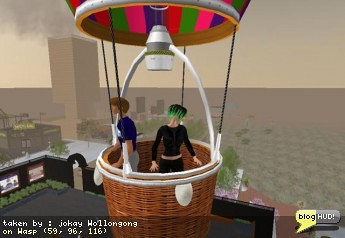
I[base ']ve kinda sat on the fence with Second Life. But really, there[base ']s no arguement about it. SL is an intensly engaging and inspiring space to be working in. Ever since the Future of Learning in a Networked World and talking more with Jo Kay and Sean FitzGerald I can see it more clearly.

With surprisingly little effort, IT here opened the communication port to allow access into SecondLife. Gotta hand it to the IT crew here at Otago Poly, for all my moaning about the profession generally (mostly legacy attitude from a gestapo like IT department in NSW DET), they have mostly been very responsive in taking off filters, allowing me to install software and try out things like Second Life.

Anyway, today I pulled a group of Occupational Therapy lecturers and others, to meet and watch as I met Jo in Second Life. In an intense hour of moving around, riding a balloon, visiting Harvard Law[base ']s SL school, and a Medical Library, not to mention bringing up a heap of Youtube videos, related websites, wikis and blogs, I think the group began to see how all this stuff can tie in together. (Links follow)

But, the usual overwhelmed feeling still pervades - that I fear will paralise anyone from moving into trialing out new practices with this teachnology. I[base ']m ready, give me a project, I[base ']d like to get iinto this I think[sigma]

Great links:
Jo Kay[base ']s BlogHud - where she is intergrating Blogging in with SecondLife
Jo Kay[base ']s Flickr photos - a bunch of screengrabs from Jo[base ']s SL experiences
SAE in Second Life - an excellent wiki page by Sean and Jo to support their presentations about edu use of SL
NMC Campus: Seriously Engaging - Youtube vid
Second Life Medical Library - an amazing range of information in a virtual library!
A Masters in Digital Media course blog - that also has a campus in Second Life
Cyber One - Harvard Law course that has a blog, wiki and Second Life campus

Creative Commons Licence

This work is licensed under a Creative Commons (Attribution) license.

[^]>

[Learn Online]
10:33:02 PM      Google It!.

Leroy and Sean in Second Life.


Click to Play

A screenrecording of me in there mucking up in Second Life with Sean

[Learn Online]
10:31:09 PM      Google It!.

Cognitive Daily's weekly podcast for December 16, 2006. Here's the Cognitive Daily weekly podcast for December 16. Don't forget that you can subscribe to the podcast using the special RSS feed: http://scienceblogs.com/cognitivedaily/rss-podcasts.xml To subscribe using iTunes, select Subscribe to Podcast from the Advanced menu, then paste or type in the URL. To access the podcast directly, click on the links below: Cognitive Daily's weekly podcast for December 16, 2006 (AAC version) Cognitive Daily's weekly podcast for December 16, 2006 (MP3 version) Read the rest of this post... | Read the comments on this post... Cognitive Daily, December 17, 2006. [Conversation] [Stephen's Web ~ by Stephen Downes ~ Edu_RSS Most Recent - RSS old]
7:42:32 PM      Google It!.

Wengo Releases Flash Softphone For Web Pages. bolsh writes "Wengo, a French company specializing in VoIP and instant messaging, and patron of the OpenWengo project (previously featured in Free Software magazine and here on Slashdot), has just released WengoVisio [~] a Flash softphone that you can download and embed in your Web page, to allow readers to call you when you're available through their browser, without downloading any software. (Disclaimer: I work for Wengo, on the OpenWengo project.) It's functionally cut down from the full Wengophone, but it's enough to be able to make a phone call in a Web page for the first time."[Slashdot] this could become a powerful networking tool --BL

4:15:53 PM      Google It!.

Adult Brains Grow From Specialist Use. Xemu writes "Researchers at University College of London's Institute of Neurology have discovered that taxi drivers grow more brain cells in the area associated with memory. Dr Eleanor Maguire says, 'We believe the brain increased in gray matter volume because of the huge amount of data memorized.' She warns against the use of GPS and says it will possibly affect the brain changes seen in this study. This research is the first to show that the brains of adults can grow in response to specialist use." London cabbies, unlike their American counterparts, have to learn the layout of streets and the locations of thousands of places of interest in order to get a license.[Slashdot]
4:08:52 PM      Google It!.

© Copyright 2007 Bruce Landon.
December 2006
Sun Mon Tue Wed Thu Fri Sat
          1 2
3 4 5 6 7 8 9
10 11 12 13 14 15 16
17 18 19 20 21 22 23
24 25 26 27 28 29 30
31            
Nov   Jan
Home

Subscribe to "Cognitive Psychology" in Radio UserLand.

Click to see the XML version of this web page.

Click here to send an email to the editor of this weblog.