From Doc today, a model of transparency:
...I've been thinking lately that the real virtue of Linux and other forms of infrastructural software--as well as all the protocols that together make up the Net... --is not only that it's open and free, but that it's transparent. It is see-thru infrastructure. In fact, what makes it infrastructural is the fact that you can see through it. You can trust it because it has no secrets. The source of its integrity may not be obvious to everybody, but it's easy to find, to examine and even to improve.
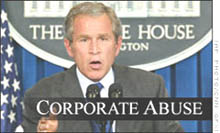
He counterposes this to the opacity of corporate accounting principles evidenced by Worldcom, Andersen, Enron et al.
An infrastructure which, like a window, makes it impossible to conceal anything offers an alluring prospect. It might, for example, render much of what passes for journalism obsolete. But something that's clear from the various corporate betrayals of the public trust: the opacity begins inside the very realm that is supposed to be making things transparent; the realm of the auditor/accountants.
What does it mean to audit? Doesn't it boil down to making something so apparent that we can see through it, and see what snags lie therein?
Nothing seems to be simpler for our "system" than to royally opacitize the auditing process itself. General Accounting Principles are so vague as to make standardization a joke, and comparison a hopeless dream.
It seems that with the advent of new media, and more media, we have more, well, mediation - more layers, rendering things yet more oblique, deflecting more light. Instead of media, naked accounting.
5:07:51 PM 
|
|