|
Wednesday, April 07, 2004 |
AbiWord goes Mac native.
AbiWord is a cross-platform, open-source word-processor that reads and
writes Word, OpenOffice, Word Perfect, RTF, Palm and HTML documents.
The project has just shipped an OSX-native version that runs without
X-Windows, meaning that all you need to do to run it is double-click
and launch.
Link
(via Forwarding Address: OS X) [Boing Boing] 
|
|
Classic Gamer Magazine. 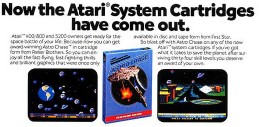 Classic Gamer Magazine is a downloadable PDF zine (6MB compressed)
devoted to news and reviews of obsolete arcade games. I love the
graphics, especially the repros of vintage video-game ads.
Link
Classic Gamer Magazine is a downloadable PDF zine (6MB compressed)
devoted to news and reviews of obsolete arcade games. I love the
graphics, especially the repros of vintage video-game ads.
Link
(Thanks, Cav!)
[Boing Boing]
|
|
Channel9 conversation continues.... Channel9 gets Slashdotted. Oh, the comments are great!
Here's some other reactions from around the Web:
Kent wants a single page of all the RSS feeds. I'll do that tomorrow.
Evelyn Rodriguez: Maybe It's Time to Re-Think What Marketing is
DonXML: The human beings behind XML at Microsoft.
"My only regret from last night was that we didn't have someone there
walking around the dinner with a video camera, recording what I saw, a
bunch of human beings in open and candid discussions."
My reply: Don, I recorded a ton of them, but the audio is useless. I'll try tomorrow in some of the product team meetings.
Jerry Pisk takes us to task for our HTML (over in a comment over on Jason Mauss' critique of Channel9): http://validator.w3.org/check?uri=http%3A%2F%2Fchannel9.msdn.com
- They can't even get the Transitional HTML right. It's just so typical
of Microsoft - we're going to listen to you, as long as you say and do
what we want you to. In this case only use IE and waste your time
watching videos... But we're going to keep telling you it's not
marketing so you have to believe it's not.
Yes, we know we have crappy HTML. Watch the site over the next few weeks. That, itself, will turn into a Channel9 topic.
Jeff Putz: "...the content strategy is kind of poor..."
My reply: AMATEUR HOUR IS THE WHOLE IDEA! In fact, here's the point.
We're using cheapo digital video cameras. You can buy this stuff at
Best Buy. No lighting. A $30 microphone. Stuff you can do at home.
Listen, we want candid looks inside Microsoft. NONE of the
interviews I posted were checked out by PR. No lawyers. No execs. It's
just me and Charles roving the campus for interesting people doing
interesting things telling interesting stories. We interview them over
lunch. In the cafeteria. In their offices. Hopefully soon out on the
lawn. Maybe at the Pro Club while we work out.
Now, we have a multi-million-dollar studio. Why not there?
A couple of reasons. 1) Scheduling becomes a nightmare. Asking for
one hour of Bill Hill's time is one thing. Asking for four hours so he
can come into studios is a whole nother thing. 2) When people go into
the studios and have lights and makeup and stuff, they become un-human.
They start talking differently. In fact, even in front of my little
tiny digital camera they behave differently. Eric Lippert, today, on
his blog, talks about "fidgeting" on camera. I want them to feel as
comfortable as possible. We're just having a conversation.
Why not just text? someone asked me on IM. I'm well-versed in why
video sucks for online communication (I do write a lot, if you haven't
noticed). Watch Bill Hill's video again and tell me that the
conversation would be just as interesting in text as it is in video.
Even with the amateurish video quality. The poor lighting. The crappy
camera work.
Plus, we wanted to play around and learn how people might want to
use video in the future. This stuff is remarkably easy to do now with a
digital camera, a firewire connection, and Microsoft Windows (using
Movie Maker to edit the videos).
I can't wait for the day when you all can post your own videos to
your blogs. Yeah, the text purists will yell and scream, but let's play
around together. There's more to life than just ASCII text you know.
Imagine doing a blog just for your family with home videos. [Scobleizer: Microsoft Geek Blogger]
|
|
Core versus Context - Core creates value that competitors can't replicate. From :: Under the Buzz - "April 2004 - Vol 5, Number 1 - The Unattainable Real-Time Enterprise (by Geoffrey Moore) (PDF):
QUOTE My analysis in a nutshell
is that core activities are those that increase the sustainable
competitive advantage of a company. Core activities create value for
customers in a way that is hard forcompetitors to replicate, and by
doing so increase the market power of the company. Investors notice
this, and reward the company with a higher stock price.
Of course in today's market, core doesn't stay core for very long as
competitors copy successful companies. At one point a web site to
distribute marketing information was a core activity. Now it is a
context activity, something that is required by the market that does
not differentiate. Political factors also drive context to encroach on
core. Everyone wants to feel important, meaning to feel like core, even
though their activities might more reasonably be considered context. In
most organizations, context activities compete for resources with core,
and when they win, the company loses.
My recommendation is that companies never lose site of the
distinction between core and context as they do business. Invest as
much as possible in core activities. Seek to reduce costs and outsource
context activities. If you have to cut spending in downturn, don't do
it across the board, cutting core and context by equal measures.
Instead, seek to actually increase your investment in core while making
even more drastic cuts in context to achieve the total cost-reduction
goal. UNQUOTE [Roland Tanglao's Weblog]
|
|
Google is a single, very large custom computer. Fascinating!
From Topix.net Weblog: The Secret Source of Google's Power:
QUOTE Competitive Advantage
Google is a company that has built a single very large, custom
computer. It's running their own cluster operating system. They make
their big computer even bigger and faster each month, while lowering
the cost of CPU cycles. It's looking more like a general purpose
platform than a cluster optimized for a single application.
While competitors are targeting the individual applications Google
has deployed, Google is building a massive, general purpose computing
platform for web-scale programming.
This computer is running the world's top search engine, a social
networking service, a shopping price comparison engine, a new email
service, and a local search/yellow pages engine. What will they do next
with the world's biggest computer and most advanced operating system? UNQUOTE [Roland Tanglao's Weblog]
|
|
Game operations in New York. ...Spent some time today updating my links page,
where I try to keep track of anyone doing anything remotely
game-related in New York. Doing this is usually depressing, but I
found, somewhat to my surprise, that I was adding more promising new
companies than deleting lame dead ones... Maybe things are actuallly
looking up.
Speaking of which, I'm hosting a meeting of the
"Gamoids," the NYC IGDA chapter in a few weeks... If you have a
professional interest in the field, and are in the area, let me know. [Games * Design * Art * Culture]
|
|
Why is LSD use down.  LSD
use is way down in recent years, according to arrest records, hospital
records, and surveys with high schoolers. Slate looked into it, and
came up with two reasons why. First and foremost, the DEA busted a
couple of guys in rural Kansas back in 2000, who supplied 95 percent of
the country's acid. The other reason is the breakup of the Grateful
Dead. LSD
use is way down in recent years, according to arrest records, hospital
records, and surveys with high schoolers. Slate looked into it, and
came up with two reasons why. First and foremost, the DEA busted a
couple of guys in rural Kansas back in 2000, who supplied 95 percent of
the country's acid. The other reason is the breakup of the Grateful
Dead.
"The LSD market took an earlier blow in 1995, when
Grateful Dead frontman Jerry Garcia died and the band stopped touring.
For 30 years, Dead tours were essential in keeping many LSD users and
dealers connected, a correlation confirmed by the DEA in a divisional
field assessment from the mid-'90s. The spring following Garcia's death
(the season the MTF surveys are administered), annual LSD use among
12th-graders peaked at 8.8 percent and began their slide. Phish picked
up part of the Dead's fan base—and presumably vestiges of the LSD
delivery system. At the end of 2000, Phish stopped touring as well, and
perhaps not coincidentally, the MTF numbers for LSD began to plummet."
Link [Boing Boing]
|
|
Spymac beats Google to the 1G free email punch.
A small Mac-related web hosting site offers a free gig's worth of
email. The company promises no adwords or other forms of promotion
linked to email contents. Instead, they're using the free service to
promote Web hosting and auction services. Link to announcement on Spymac site, Link to related News.com story. (via Batelle, thanks also Jean-Luc) [Boing Boing]
|
|
Customer demand for a ubiquitous InfoPath runtime.
The last time I asked Microsoft why there's no plan to make the
InfoPath runtime ubiquitous, the answer I got was: "We don't hear
customers asking for it." Well, I do. Here's a typical rant from one
customer who, because his company has a relationship with Microsoft
that he doesn't want to jeopardize, asked me to anonymize his comments:
I believe a primary requirement of a forms application is to make it
possible for the form to be completed by a wide audience of people from
whom I wish to gather data. A key driver, at least in the world of my
customers, is to be able to distribute the form widely to people who
aren't necessarily connected to the network and get them to fill it in
and return it. I don't want to authenticate these people in my network.
They won't install software on their computers just to fill out my form.
They don't want to learn a new application.
It seems InfoPath has completely ignored the question of how the form
will actually be filled in by the responder. There is no free viewer as
there is with Adobe Acrobat. There is no ability to save the form
template as an ASP.NET web form. It appears that Microsoft expects
everyone to purchase a full copy of InfoPath--the complete form design
application--just so they can fill out a form. They can't possibly
believe the product will gain any traction with this licensing and
deployment model, can they? [1] What are they thinking? [2]
So my main question is, is there any way to deploy InfoPath forms
without putting full InfoPath on every desktop? [3] Do you know whether
Microsoft understands this issue and are planning anything to address
it? [4] The two applications that are widely available on everyone's
desktop are a web browser and Adobe Acrobat, and it seems like it would
be a good idea for InfoPath to support forms deployment via one of those
means. Am I missing something here? [5]
... [Jon's Radio]
|
|
Collaborative editing. I've posted about this before.
I sure wish ZeroConf (Rendevouz) was readily available on the PC. I know, I know it is - but nobody is using it!
Collaborative Coding / Text Editing.
I've seen two really neat collaborative text editors - where two
people can work on the same document or piece of code simultaneously. 
- Mac - SubEthaEdit is very polished and works via Rendevous.
- Windows - A bit more complex: an open source editor jEdit that takes a plug in called DocSynch and uses the IRC as the network protocol.
Nothing for Visual Studio yet... [nick gaydos > thynk] [Marc's Voice]
|
|
Oh man! That's all I can say. Quindi rocks!. Another tool to roll into the "Digial Life Aggregator".
The Anchordesk column this morning covered meeting minders and organizers. I've used Microsoft's Onenote a bit, but the review of Quindi looked pretty interesting.
I'll admit that I think Tablets may go somewhere, but Quindi doesn't
focus on handwriting. They've allowed their software to record video,
sound, powerpoint images, as well as the standard notes, agenda items
and tasks that meetings normally entail.
The interesting bits
are that each of these items can be played back double time. I've got
to imagine that this allows you to sift through the meeting timeline
pretty efficiently.
Neat ideas in concept... now I'll just need to try Quindi out!
[nick gaydos > thynk]
What is an indexed meeting?
The key to making captured meetings
usable is indexing: the time-stamped markers that let viewers locate
the important stuff quickly. Viewers can navigate through a meeting by
slide, keyword, note, or screenshot. Additionally, we provide the
ability to speed up playback – up to 2x the normal speed – without
distortion.
Key Features
Capture rich meeting content: voice, video, notes & data
Review rapidly via indexing and accelerated playback
Share with others by email
View using free Quindi viewer
Uses standard PC/laptop and off-the-shelf peripherals
[Marc's Voice]
|
|
Channel9 Launches. So, I turn on my computer this morning, go over to Technorati. Enter: http://channel9.msdn.com into the search box there. And, wow, people discovered that we turned on Channel9 overnight. They love it. They hate it. And all sorts of opinions in between.
Check it out and let me know what you think.
There's a Wiki in there. There's a weblog in there. There's a
streaming video in there. There's a social computing paradigm in there.
Oh, and there's RSS 2.0 streams on EVERYTHING. Steve Gillmor, did you
wanna know whether Microsoft gets RSS? Check it out! Subscribe to it.
We'll be pushing down more videos soon (Translation: within a day or
two, and we'll try to stay on pace to push down new stuff every day or
two after that -- if you haven't yet tried an RSS news aggregator, this
is your chance).
Ahh, I see Mary Jo Foley has written about it: Microsoft turns on Channel9.
I'm off to go to the MVP Global Summit. Eric Rudder will show this to everyone. I'll be online this afternoon. [Scobleizer: Microsoft Geek Blogger]
|
|
Robert Crumb family pictures. 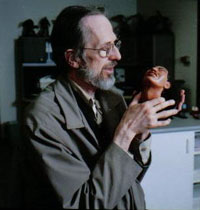 Robert
Crumb's son Jesse runs a site that sells Crumb art. There's also a
gallery of family photos. (Robert shown on left with a Devil Girl wall
plaque). Lots of good stuff on the site, including art from Max,
Charles, Sophie, and Jesse Crumb. Link (via The Cartoonist) Robert
Crumb's son Jesse runs a site that sells Crumb art. There's also a
gallery of family photos. (Robert shown on left with a Devil Girl wall
plaque). Lots of good stuff on the site, including art from Max,
Charles, Sophie, and Jesse Crumb. Link (via The Cartoonist)
[Boing Boing]
|
|
TiVo, Amazon, and the library.
I'm not sure I'll ever write another book, because I have more fun
writing here every day, but I love reading books and seeing authors
speak about their books. Tonight I used TiVo to skim through a dozen
accumulated hours of CSPAN's Booknotes and BookTV. Then I watched the
two talks that grabbed me: Shashi Tharoor on Nehru: The Invention of India and Irshad Manji on The Trouble with Islam. At the same time, using LibraryLookup, I found that Tharoor's book is available at the library and Manji's is on order.
... [Jon's Radio]
|
|
Popular Mechanics has an interesting article on the RPG-7:
But by the time the first statue of Hussein was pulled off its
pedestal, a massive stockpile of rocket-propelled grenade launchers and
shoulder-launched anti-aircraft missiles had fallen into the hands of
Islamic insurgents (...Hussein's looted arsenal was also brimming with
SA-7 Grail anti-aircraft missiles. ....In Iraq, as many as 5000 Grails
are believed to have fallen into the hands of insurgents.). In
the months that followed, half the Americans who died in Iraq were
killed by one type of these weapons, the RPG-7 rocket-propelled grenade.
Mordica and other weapons analysts tell PM that at least 1
million RPG-7s have been manufactured by Bazalt or are under license.
What is known is that since the fall of the Soviet Union, the flow of
RPG-7s from military warehouses to the black market has grown from a
trickle to a flood. RPG-7s are now so plentiful, they can be bought for
less than the price of a decent laptop computer.
The mujahedeen (in Afghanistan) found the weapon even more
valuable, adopting tactics that included forming armor-vehicle
hunter-killer teams. "Fifty to 80 percent of the personnel were armed
with RPG-7s. This could be up to 15 RPGs," says Grau.
Part of the reason for the continuing success of the RPG-7 is
Bazalt's eagerness to introduce new types of ammunition for its
venerable weapon.
A new defense is in the pipeline:
At present, the most
promising plan for defending troops against insurgents' rocket and
missile attacks is called FCLAS. The abbreviated acronym stands for
"full spectrum active protection close-in layered shield," which in
itself is an explanation of how it works. FCLAS is an antimissile
missile in a tube. Strategically placed around a vehicle, boat,
building or helicopter, these missiles create a sort of invisible
shield that detects and then demolishes incoming threats. [John Robb's Weblog]
|
|
Skype CE.
A stripped down version of Skype for Windows CE handhelds (needs a PDA
with a wireless connection) is now available according to their news blog. FAQ. Download.
It also supports conference calls (not available for the CE version)
for up to 5 callers and call holding for up to 16 calls. It's free,
secure (encrypted), high-fidelity, and P2P. Finally a reason to own a
CE wireless handheld. [John Robb's Weblog]
|
|
Laszlo is independent of Flash and can do more than Flash since it is based on XML. Awesome new blog from Laszlo's CTO (via Ted Leung)! I want more rich internet applications built using Laszlo!
From Laszlo is XML technology, not Flash technology:
QUOTE Again, Laszlo is about
XML, not about Flash. But wait, you say, Laszlo applications run in the
Flash player. So how can that be true? And why is that meaningful or
relevant?
First, Laszlo's platform and APIs are abstracted from the client
APIs. In contrast, Macromedia's MXML includes ActionScript and relies
on UI components built in Flash MX -- it's tightly bound to the Flash
player and authoring tool. Or consider Microsoft's upcoming XAML, which
is tightly bound to Microsoft's Avalon/WinFX client framework.
Laszlo's XML language and framework is self-contained (no need to
use ActionScript APIs, Flash MX, C#, "code behind," or any other
external language) and designed expressly for development of rich
interactivity. Even Laszlo's own UI components are defined in LZX;
there's no notion of "intrinsic" widgets or an escape hatch such as
embedded Flash-authored components. For Laszlo, the SWF format is
simply a compiler output format. An analogy is C++ -- a developer
writes in C++ and the compiler targets a given CPU, whether it's Intel,
PowerPC, or SPARC. Here, a developer writes in LZX, and the compiler
outputs SWF bytecode.
(As an aside: Flash developers sometimes assume that Laszlo, since
it targets Flash 5, cannot offer capabilities beyond the Flash 5
authoring tool. This is not the case; as an obvious example, Laszlo's
language offers capabilities well in advance of Flash 5 -- e.g, a
formal class/object model. But that's a topic for another day.)
Over time, Laszlo wants to make LZX a universal,
runtime-independent, rich Internet language. Imagine writing a single
Laszlo application and using Laszlo Presentation Server to deliver this
application into Macromedia (Flash), Microsoft (Longhorn/Avalon), and
Java/J2ME runtimes. This is the architecture we've built for from day
one, and we have designed the system so that compatibility will be
preserved as the Laszlo compiler targets other runtime environments.
Take a close look at LZX and you'll see that with its view
hierarchy, constraints, XPath-based data binding system, and animators,
it delivers unprecedented expressive capability for rich, data-driven
UIs. With a clean language designed from the ground up for the purpose
of delivering RIAs with highly customized behaviors, this is possible. UNQUOTE [Roland Tanglao's Weblog]
|
|
I'm in Kunal's World now, (Now I know why we called them K-Logs). You
know, Kunal's OutlookMT feature is, for me, a killer feature. One of
those that'll change -- dramatically -- my life forever.
The Outlook team and Sharepoint team should hire Kunal to implement this feature ASAP. It is THAT IMPORTANT.
What does it do?
It adds a new folder to Outlook. OK, let's say Bill Gates emailed me
right now. Let's say I wanted to post that email out to the world? In
the old world I'd need to open up Radio UserLand, copy the email, clean
up the HTML, then click post.
New "Kunal's" world? Copy the email over to the folder. It's posted. Done. No more work.
Do you have any idea how this is going to change knowledge management? You just watch!
Now, keep in mind, this isn't commercial quality. Lots of work to
do. But he's responsive. I bet that by the end of the week he has it
working well enough for almost everyone. The quality difference between
yesterday and today is huge. [Scobleizer: Microsoft Geek Blogger]
|
|
© Copyright 2004 William J. Maya.
|
|
|