 |
Sunday, April 11, 2004 |
Open Source VoIP.  This is the third Ted inspired post..... This is the third Ted inspired post.....
Schtoom is a open source VoIP project in Python. This could be huge!
Vercotti: (Michael Palin) Well,
I had been running a successful escort agency - high class, no really,
high class girls... we didn't have any of that . That was right out.
And I decided. (phone rings on desk) Excuse me. (he answers it)
Hello... no, not now... shtoom... shtoom... right... yes we'll have the
watch ready for you at midnight... the watch... the Chinese watch... yes, right oh, bye bye... Mother.
Shtoom is a open-source, cross-platform VoIP softphone, implemented
in Python. As well as the basic phone, the package also includes a
number of other applications -
- shtoom - the end-user phone
- shtam - a simple answering machine/voicemail application
- shmessage - an announcement server
Shtoom should work on Windows, Linux and Mac OS X. It ships with
user interfaces for Qt/KDE, Gtk/GNOME, Tk and a command line. There
will hopefully be native user interfaces for Windows and the Mac soon,
until then, the Tk interface works on those platforms.
Shtoom has audio support on Linux using OSS or ALSA, and on all
other platforms using the PortAudio library. Native sound drivers for
Mac/Windows are planned (the Mac interface should be done soon --
volunteers to help with an interface from Python to Windows DirectSound
libraries are more than welcome!)
Shtoom requires Python 2.3.3 and Twisted 1.1.1 or greater.
Availability:
Shtoom 0.2 is now available. You can get it from the Sourceforge Files page. Or, for the brave, you can get source via subversion. Anonymous checkouts should get svn://divmod.org/svn/Shtoom/trunk/shtoom, while folks with developer access should use svn+ssh://divmod.org/svn/Shtoom/trunk/shtoom. [Marc's Voice] 
|
|
Context Broker. Context Broker Architecture.
CoBrA is an agent based architecture for supporting context-aware
systems in smart spaces (e.g., intelligent meeting rooms, smart homes,
and... [Raw]
| [about.CoBrA] |
|
Context Broker Architecture (CoBrA)
is an agent based architecture for supporting context-aware systems in
smart spaces (e.g., intelligent meeting rooms, smart homes, and smart
vehicles). Central to this architecture is an intelligent agent called context broker
that maintains a shared model of context on the behalf of a community
of agents, services, and devices in the space and provides privacy
protections for the users in the space by enforcing the policy rules
that they define.
Key differences between CoBrA and other similar architectures are the following:
- CoBrA uses the Web Ontology Language OWL,
a W3C Semantic Web standard, to define ontologies of context (people,
agents, devices, events, time, space, etc.). In other systems, context
is often implemented as programming language objects (e.g., Java
classes), lacking the expressive power to support context reasoning and
high-level knowledge sharing.
- CoBrA provides a resource-rich context
broker to maintain a shared model of context for all computing entities
in an associated space. In other systems, individual entities are
usually required to manage their own contextual knowledge.
- CoBrA allows the users to define privacy
policy to control the sharing and the use of their situational
information (e.g., where they are, who they are with, what they are
doing). In other systems, the computing entities are usually free to
share any acquired situational information of a user.
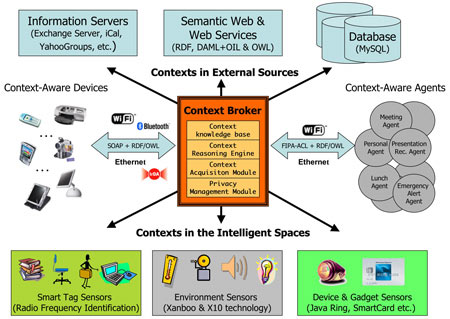
Figure 1 shows an overview architecture diagram of CoBrA. For more information, please see the documents listed in the paper section. |
Thanks Danny! [Marc's Voice]
|
|
New short from Susannah Breslin. Former BoingBoing guestblogger Susannah "Invisible Cowgirl" Breslin celebrates a birthday today. She also a new short story out in Ducky Magazine. Dig the phat cover art. Excerpt:
 One morning, she woke up and discovered that her head was gone. She had
reached up to pat her hair, or rub the sleep from her eyes, or scratch
her ear, and she had realized that her head was nowhere to be found.
Where, she wondered, had it gone? She had no idea at all. She could not
recall, in fact, very well what had happened the previous evening. She
had been at a bar, and she had gotten drunk, and then she had come back
home. From what she could remember, her head had still been sitting
squarely on her shoulders when she had climbed into bed. Perhaps, she
considered, her head had run off at some point during the night while
she lay sleeping.
One morning, she woke up and discovered that her head was gone. She had
reached up to pat her hair, or rub the sleep from her eyes, or scratch
her ear, and she had realized that her head was nowhere to be found.
Where, she wondered, had it gone? She had no idea at all. She could not
recall, in fact, very well what had happened the previous evening. She
had been at a bar, and she had gotten drunk, and then she had come back
home. From what she could remember, her head had still been sitting
squarely on her shoulders when she had climbed into bed. Perhaps, she
considered, her head had run off at some point during the night while
she lay sleeping.
Link to "The Woman Who Lost Her Head". [Boing Boing]
|
|
Technorati Toolbar. I'm
developing the Technorati Toolbar for Internet Explorer. It enables you
to look up references from blogs that point to the web page you're
reading, and lots of other cool stuff. I'm developing an open-ended
plug-in system: Technorati Toolbar Plug-ins will extend the Technorati
Toolbar to support popular blogging tools, render interactive
interfaces to dynamic web services, and integrate other tools and
services into high level, practical, task oriented user interfaces.
[Don Hopkins' RadiOMatic BlogUTron]
|
|
Good time waster: simple sliding tile puzzle.  My
dad sent me the url to this java-based slider tile puzzle, and it has
killed half my work day so far. He solved it in 48 moves. I guess 44 is
the minimum. I can't solve it! If everyone who reads Boing Boing spends
ten minutes on it, it will result in 312.5 man-days of wasted time! (It
didn't work in Safari for me; I had to use IE) Link My
dad sent me the url to this java-based slider tile puzzle, and it has
killed half my work day so far. He solved it in 48 moves. I guess 44 is
the minimum. I can't solve it! If everyone who reads Boing Boing spends
ten minutes on it, it will result in 312.5 man-days of wasted time! (It
didn't work in Safari for me; I had to use IE) Link
[Boing Boing]
|
|
The $14 SteadyCam.  Brian
sez: "For less than 5% of the price of a real Steadicam (the ones made
for small video cameras go for about $900), you can apparently build
your own "Steady-Cam" for $14 with parts from a hardware store. The
sample video makes it look pretty good. Great gift for the amateur
videographer in your life who refuses to use a tripod, the bastard.
(Oh, and stabilized images compress much better for the Web, too.)" Link Brian
sez: "For less than 5% of the price of a real Steadicam (the ones made
for small video cameras go for about $900), you can apparently build
your own "Steady-Cam" for $14 with parts from a hardware store. The
sample video makes it look pretty good. Great gift for the amateur
videographer in your life who refuses to use a tripod, the bastard.
(Oh, and stabilized images compress much better for the Web, too.)" Link
[Boing Boing]
|
|
Distributed audiobook for Down and Out. Jill Smith has begun a distributed audiobook project for my novel Down and Out in the Magic Kingdom, whose new, liberal Creative Commons license allows for exactly this kind of mishegas (see the distributed audiobook project
for Lessig's Free Culture for an example of how well this can work).
She's recorded a reading of the prologue and posted it to the Internet
Archive's public submission area, where open-licensed material is hosted for free.
I'm immensely gratified by this -- audiobooks are my favorite
nontextual medium for storytelling and I can't fall asleep at night
without one. I would love for others to take Jill's lead and finish it
out.
Link
(Thanks Jill!) [Boing Boing]
|
|
WND.
An Arab language jihadi Web site posted a very rough six point plan for
causing economic destruction in the US. The points are:
- attacks on the assets of large American companies all over the world;
- attacks on U.S. oil refineries;
- attacks on civilian airports with the goal of financially devastating U.S. airlines;
- deliberate pollution of food system;
- setting of fires in the forests – "especially those that
provide the American market with the raw materials for the wood and
paper and byproducts industries";
- attacks like those on the railway transportation lines in Spain.
[John Robb's Weblog]
|
|
Try your hand at balancing the federal budget. US Federal Budget sim created at Berkeley. This
simulation asks you to adjust spending and tax expenditures in the the
2004 budget proposed by the White House in order to achieve either a
balanced budget or any other target deficit...According to the White
House, the 2004 fiscal deficit is projected to be $307 billion. This
does not include the costs of the Iraq War, so it has been increased by
a base estimate of $50 billion for those costs in this simulation
(which can be increased, lowered or eliminated depending on peoples
views of the costs or likelihood of the war.).
Link [Boing Boing]
|
|
© Copyright 2004 William J. Maya.
|
|
|


